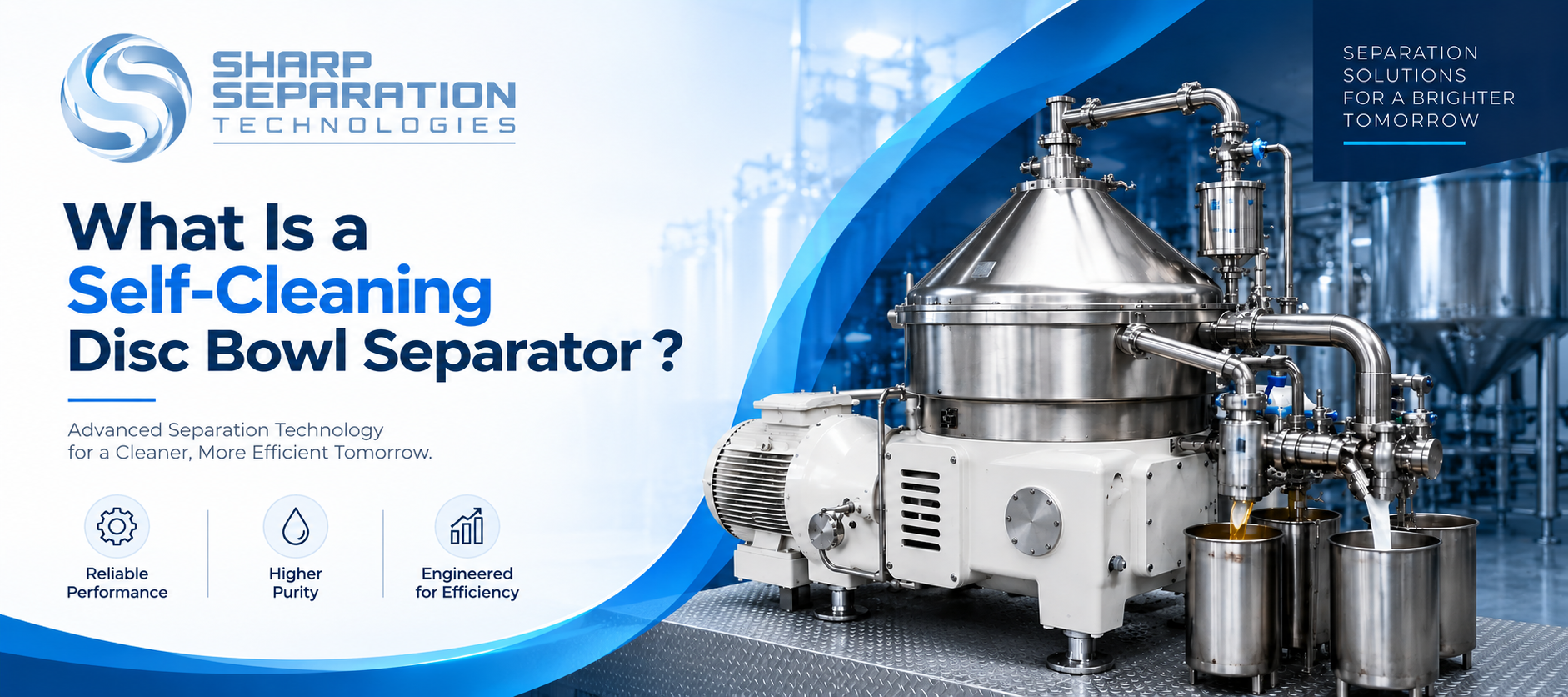
Industrial processes often require reliable separation of liquids, solids, or multiple phases without interrupting production. This is where advanced centrifugal separation technology becomes valuable. A self-cleaning disc bowl separator manufacturer develops equipment designed to provide efficient separation while automatically removing accumulated solids from the bowl.
Unlike conventional filtration systems that may require frequent manual cleaning, self-cleaning disc bowl separators are designed for continuous or semi-continuous industrial operation. Their high-speed rotating bowl generates centrifugal force, allowing different phases to separate according to their density. Depending on the process, these machines can be used for clarification, purification, concentration, and liquid-liquid-solid separation.
What Is a Self-Cleaning Disc Bowl Separator ?
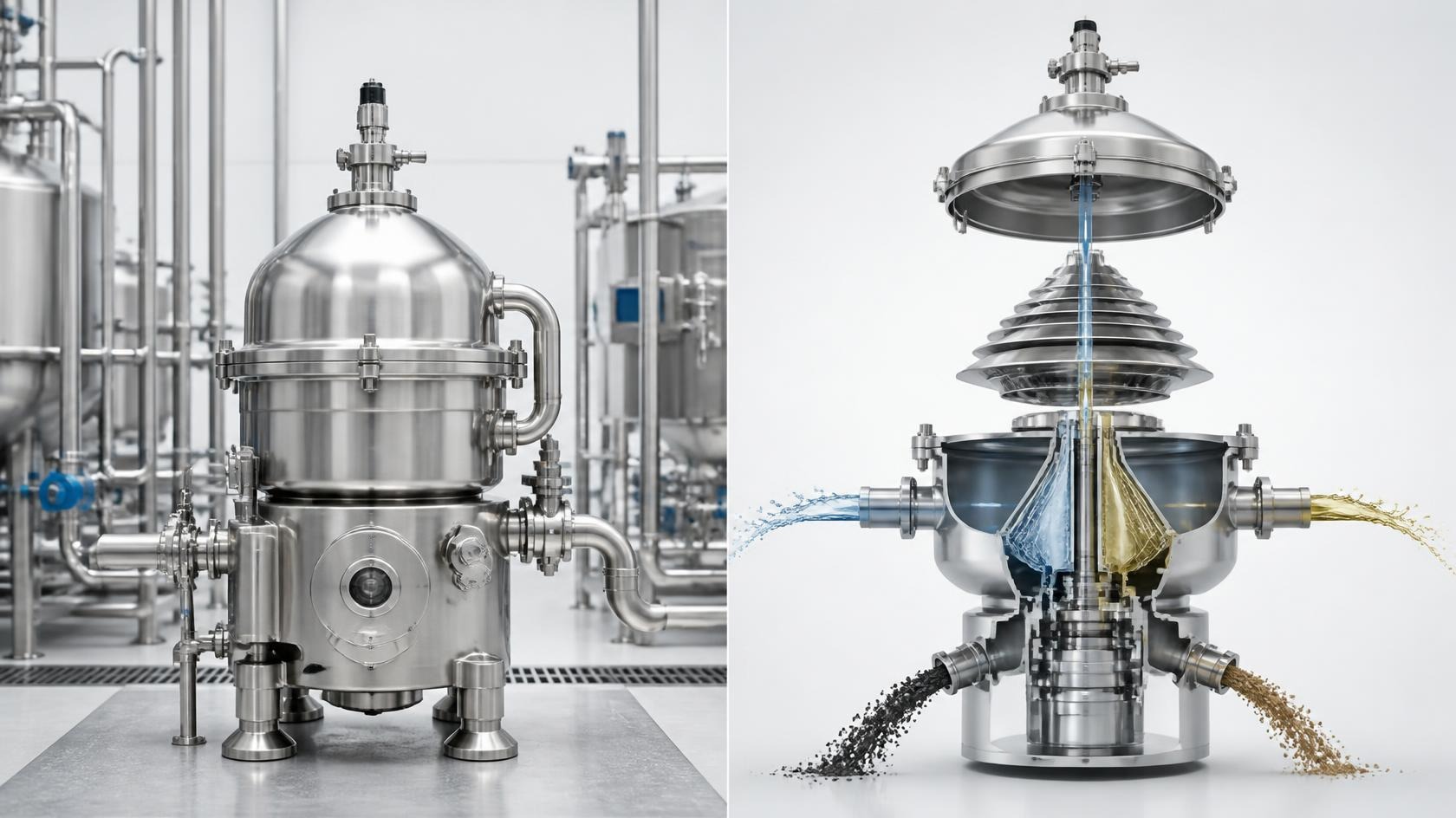
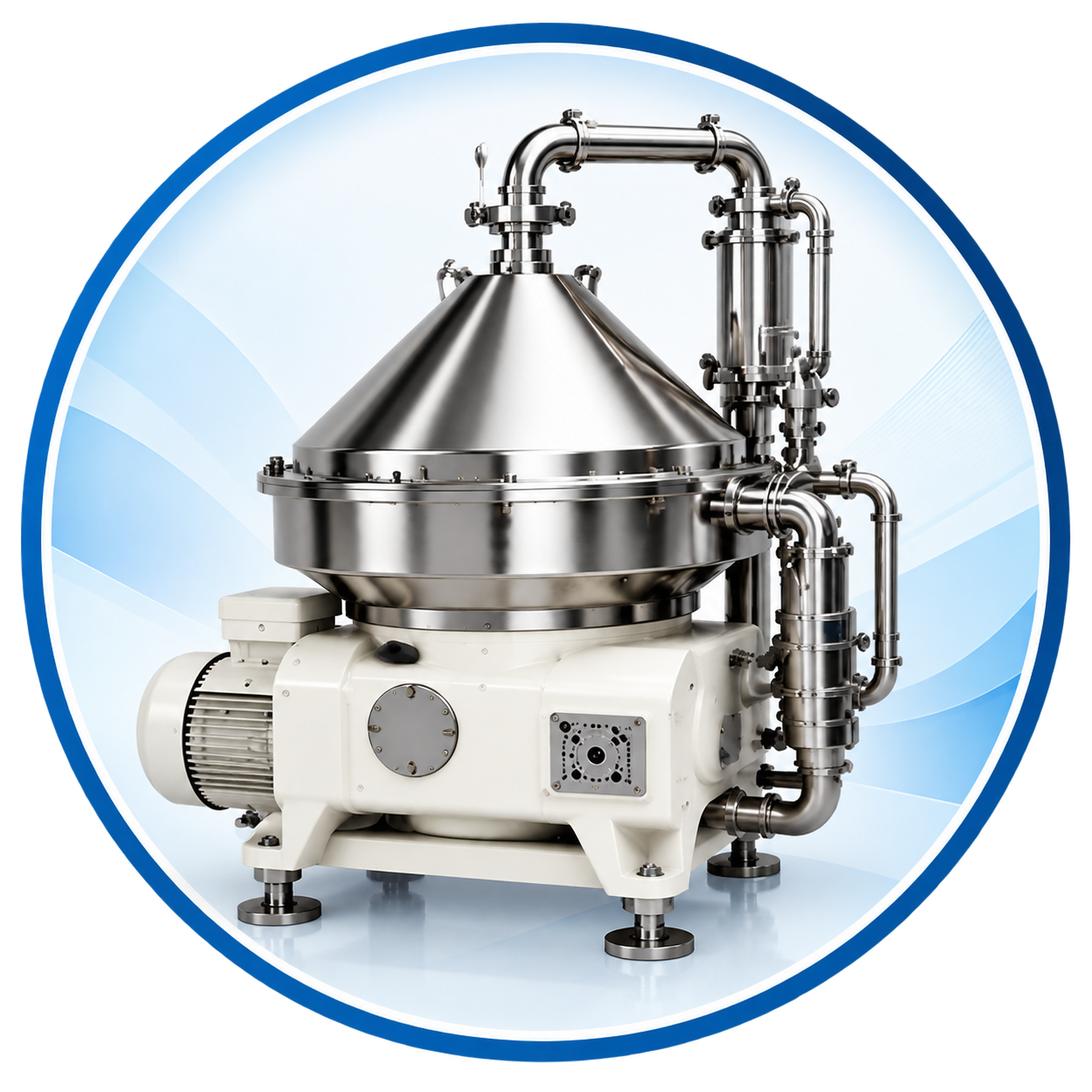
A self-cleaning disc bowl separator is a high-speed centrifugal machine used to separate suspended solids and, in suitable configurations, two immiscible liquid phases. Inside the rotating bowl is a stack of closely spaced conical discs. This disc stack increases the effective separation area and helps particles travel toward the bowl wall while separated liquid phases move toward their respective outlets.
The self-cleaning mechanism allows collected solids to be discharged from the bowl without requiring the operator to dismantle the equipment for every cleaning cycle. Modern systems can incorporate automated controls, programmable discharge cycles, monitoring systems, and safety features.
The exact operating configuration depends on the application, feed characteristics, required throughput, and desired separation efficiency.
How Does a Disc Bowl Separator Work ?
The separation process begins when the feed enters the rotating bowl. The bowl operates at high speed, generating centrifugal force that can be many thousands of times greater than normal gravity.
Within the disc stack, the feed is distributed into thin layers. Because components have different densities, centrifugal force causes the denser material to move outward while lighter liquid phases move inward.
In a liquid-liquid-solid application, the machine can simultaneously manage two liquid phases and accumulated solids. Solids migrate toward the bowl's sediment-holding area, while the separated liquid phases are discharged through dedicated outlets.
The disc stack is particularly important because the closely spaced discs create a large effective settling area within a relatively compact machine.
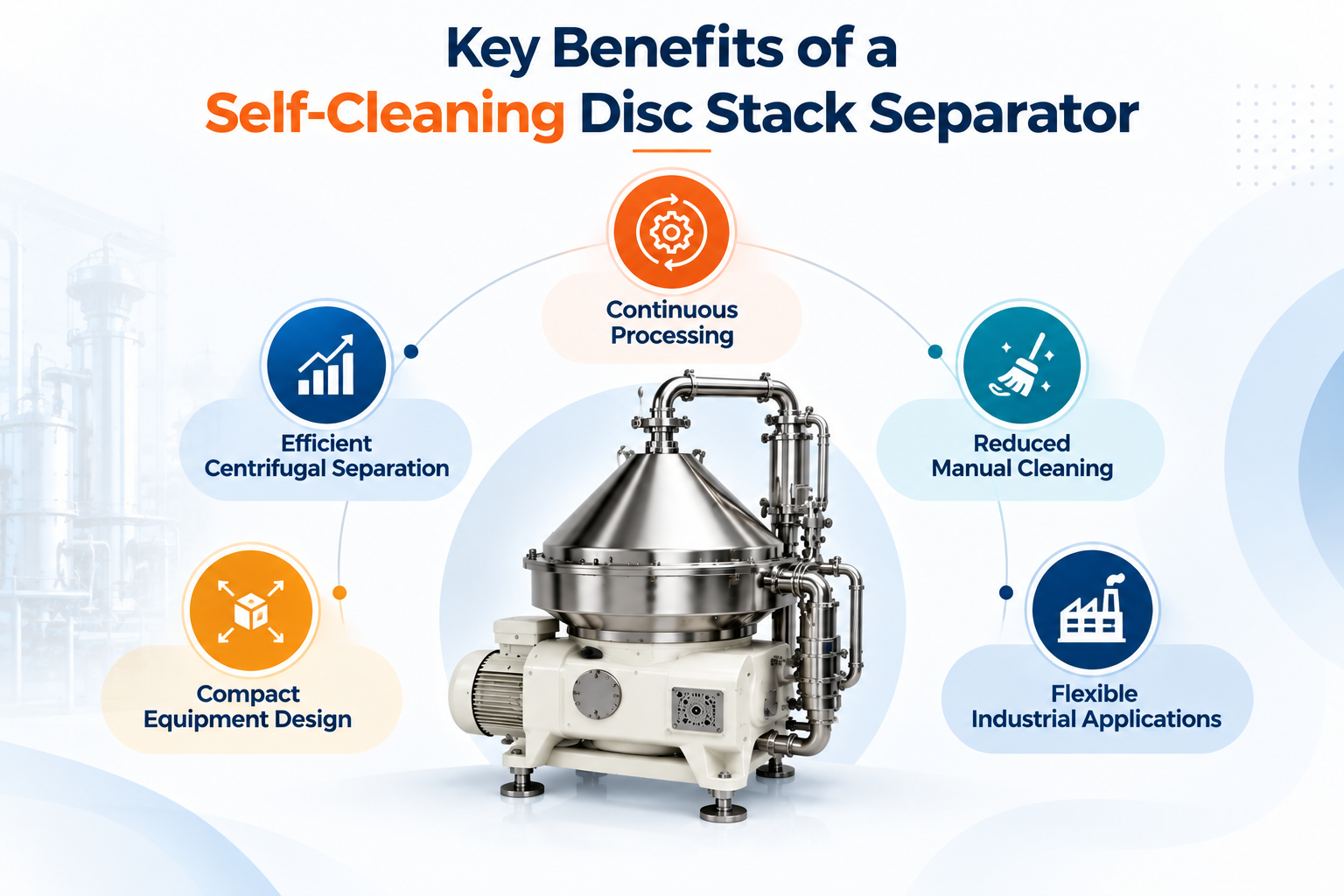
Key Benefits of a Self-Cleaning Disc Stack Separator
1. Continuous Processing
One of the major advantages of a self-cleaning disc stack separator is its ability to support continuous industrial processing. Automatic solids discharge reduces the need for frequent manual intervention and can help maintain production efficiency.
2. Efficient Centrifugal Separation
High rotational speeds generate strong centrifugal forces, making these machines suitable for separating fine suspended particles and liquid phases that may be difficult to separate using gravity alone.
3.Reduced Manual Cleaning
Because the bowl can discharge accumulated solids automatically, operators may spend less time stopping equipment for manual sludge removal. The exact discharge interval is normally selected according to the solids load and process requirements.
4. Compact Equipment Design
A disc-stack configuration can provide substantial separation performance within a relatively compact footprint. This can be useful where production facilities have limited floor space.
5. Flexible Industrial Applications
A properly configured separator can be used across industries including food and beverage processing, dairy, edible oils, chemicals, pharmaceuticals, biotechnology, marine applications, and oil purification.
Major Applications of Disc Bowl Centrifuges
A disc bowl centrifuge can perform different separation duties depending on its bowl design and process configuration.
Oil Purification
Industrial oils may contain water, sludge, and other contaminants. Centrifugal separation can help remove these unwanted phases and improve the cleanliness of process or lubricating oils. Self-cleaning disc separators are also used for applications involving fuel, hydraulic, lubrication, and other oils.
Food and Beverage Processing
Juices, beverages, edible oils, and other food products can contain suspended particles that need to be removed before subsequent processing. Disc-stack centrifugal systems can provide high-speed clarification while supporting hygienic process requirements.
Dairy Processing
Dairy plants use centrifugal separation technology for applications such as milk clarification and cream separation. Disc separators can help remove unwanted particles and separate liquid phases efficiently.
Biodiesel Processing
Biodiesel production can involve separation of biodiesel, glycerin, catalyst residues, methanol, and other process components. Centrifugal separators can be incorporated into appropriate purification and washing stages.
Pharmaceutical and Biotechnology Processes
Where product purity and controlled processing are important, centrifugal separation can be used for applications such as fermentation-broth clarification, microbial concentration, and separation of process components.
What Should You Look for in a Manufacturer ?
Choosing the right self-cleaning disc bowl separator manufacturer requires more than comparing machine prices. The separator should be matched to the actual process.
Process Experience
Look for a manufacturer with experience in your specific industry and application. Separation requirements can vary considerably between oil purification, dairy processing, beverage clarification, chemical processing, and biotechnology.
Customized Engineering
A reliable manufacturer should be able to evaluate factors such as feed flow rate, density, viscosity, solids concentration, operating temperature, required separation quality, and pressure requirements.
Bowl Configuration
The bowl design is one of the most important factors affecting performance. Clarification, purification, and liquid-liquid separation can require different configurations.
Automation and Control
Modern separators can incorporate PLC-based controls, automatic discharge systems, vibration monitoring, alarms, and other process-control features. Such systems can make operation more consistent and reduce manual intervention.
Maintenance and After-Sales Support
A separator is a long-term industrial investment. Spare-parts availability, technical support, maintenance procedures, commissioning assistance, and operator training should therefore be considered before purchasing.
Self-Cleaning Separator vs. Conventional Solid-Bowl Equipment
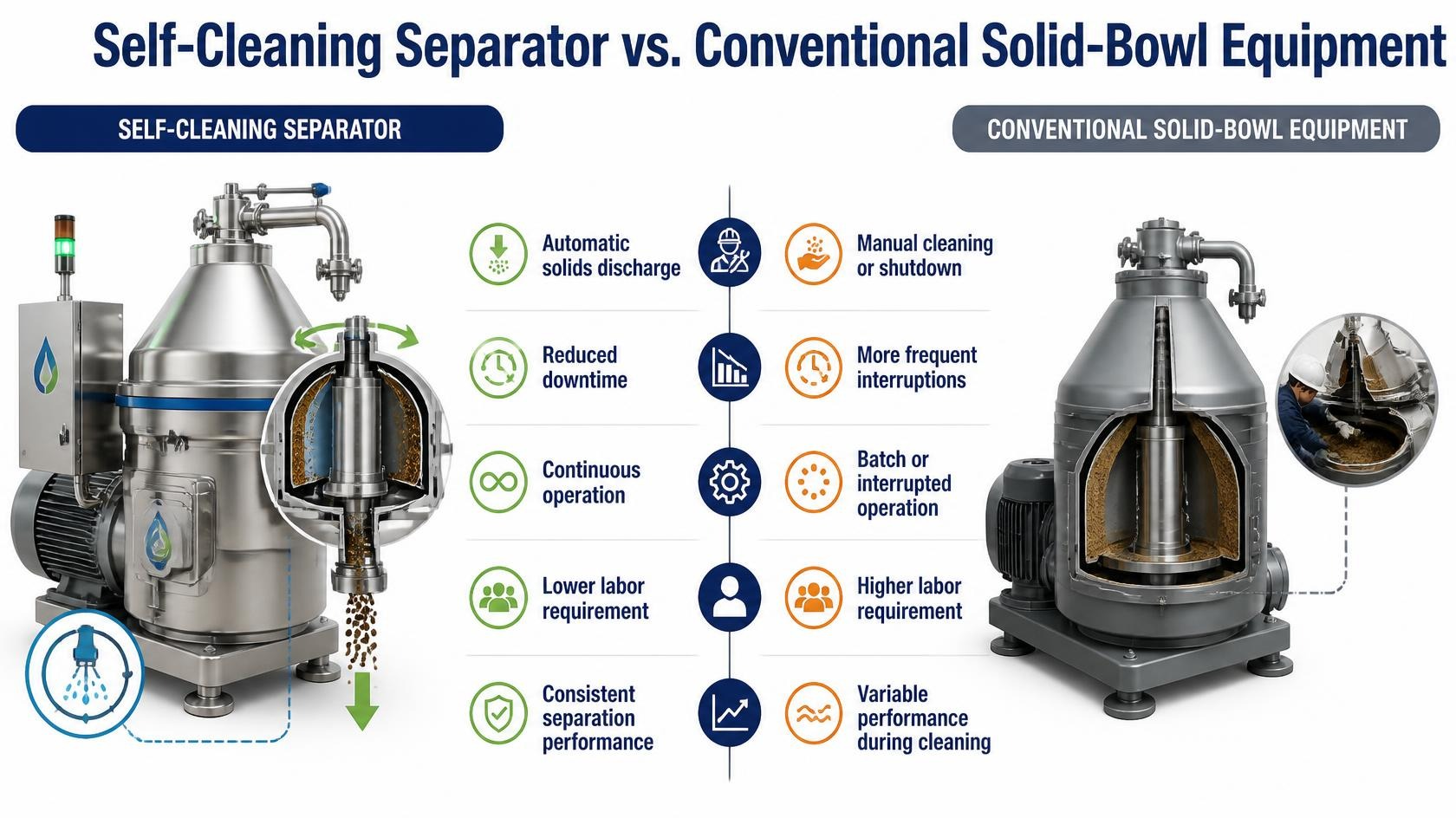
The biggest practical difference is the method used to manage separated solids.
A conventional solid-bowl centrifuge may require the machine to be stopped and opened for manual solids removal, depending on its design and application. A self-cleaning separator incorporates a mechanism that allows accumulated solids to be discharged automatically.
This distinction can be particularly important for processes that generate significant quantities of solids or require extended operating periods.
However, self-cleaning technology should not automatically be considered the best choice for every application. The appropriate machine depends on feed characteristics, solids concentration, desired throughput, separation requirements, and operating conditions.
How to Select the Right Industrial Centrifuge Separator
Before selecting an industrial centrifuge separator, prepare accurate process information for the manufacturer.
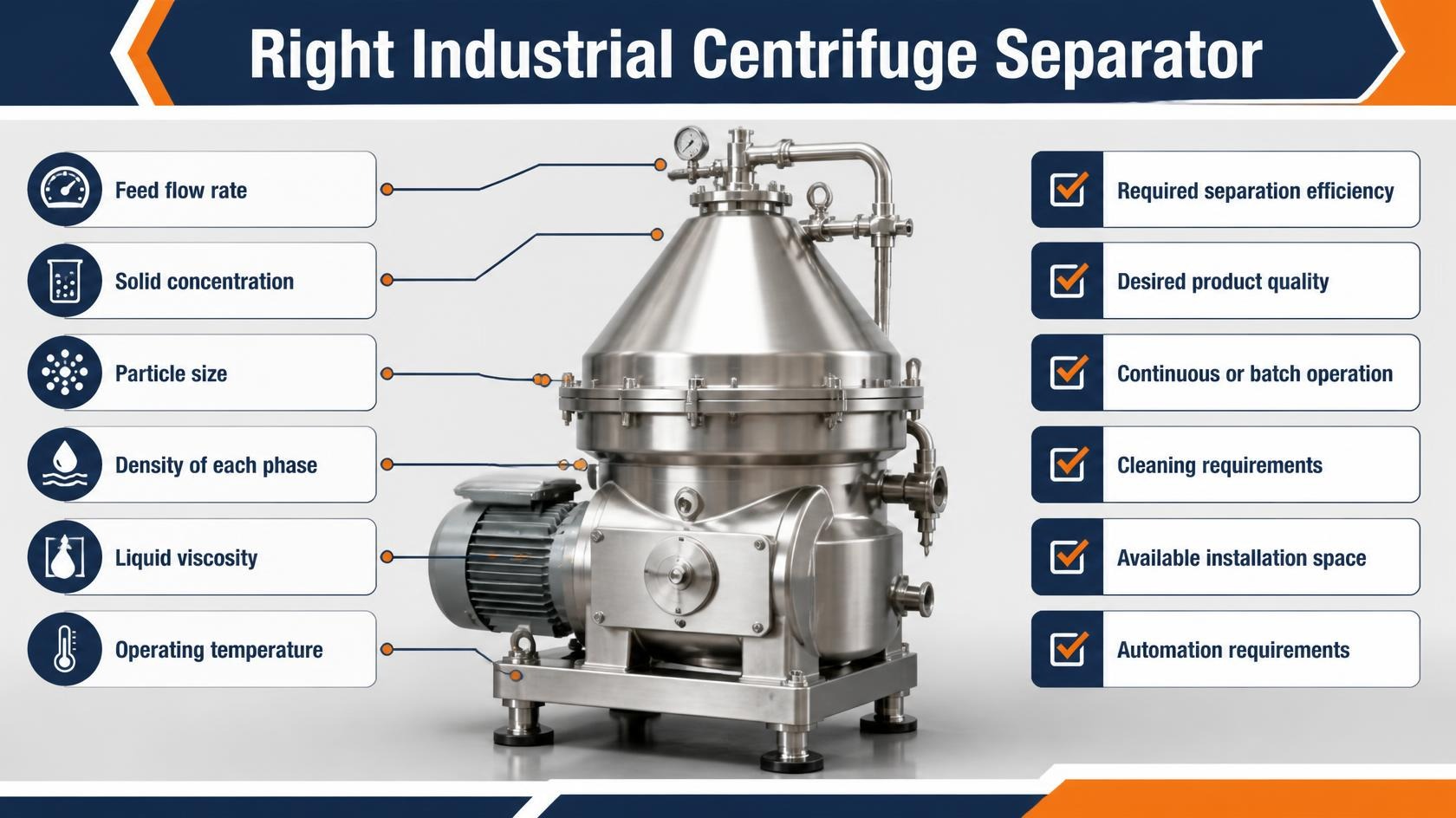
Important Parameters Include :
- Feed flow rate
- Solid concentration
- Particle size
- Density of each phase
- Liquid viscosity
- Operating temperature
- Required separation efficiency
- Desired product quality
- Continuous or batch operation
- Cleaning requirements
- Available installation space
- Automation requirements
Providing this information allows the manufacturer to recommend a suitable bowl configuration, disc-stack design, drive system, discharge arrangement, and control system.
Why Manufacturer Selection Matters ?
The separator is a precision machine operating at very high rotational speeds. Mechanical balancing, bowl design, materials, drive components, control systems, safety features, and manufacturing quality all influence reliability.
For this reason, buyers should evaluate a manufacturer's engineering capability rather than selecting equipment solely on initial purchase price.
A capable supplier should be able to explain the separation principle, expected process performance, maintenance requirements, operating limitations, and appropriate safety procedures.
Conclusion
A self-cleaning disc bowl separator manufacturer plays an important role in providing centrifugal separation equipment for demanding industrial processes. By combining a high-speed bowl with a disc stack and an automated solids-discharge mechanism, these separators can support efficient processing while reducing manual cleaning requirements.
From oil purification and dairy processing to beverage clarification, biodiesel processing, chemicals, and biotechnology, disc-stack technology can be adapted to a wide range of separation applications.
The best equipment choice ultimately depends on the characteristics of the feed and the required separation result. Before purchasing, businesses should compare process expertise, engineering capabilities, automation, bowl configuration, maintenance support, and customization options.
Working with an experienced manufacturer can help ensure that the selected separator is properly matched to the process, production requirements, and long-term operating goals.
Note : To know more detail idea about centrifuge ,follow th given link